
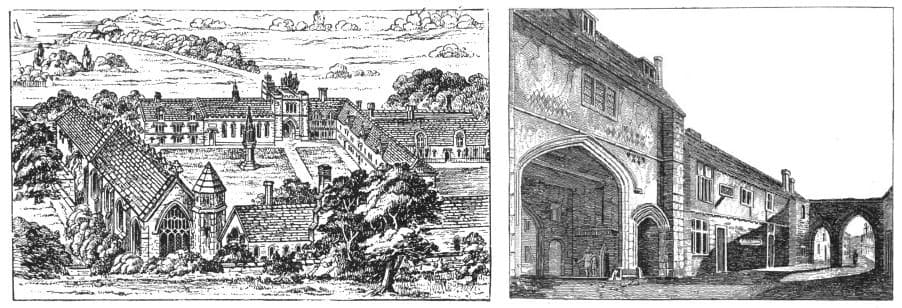
Bermondsey is one of the oldest parts of Southwark with evidence of Roman occupation. Bermondsey’s Thameside location made it an important transport hub for the trade of all manner of goods. Its success caused The City to enforce restrictions (to preserve its dominance) and earned Bermondsey the nickname ‘London’s Larder’ due to the amount of foodstuffs that passed through its docks.
The site where Bermondsey Square is today is best known as the site of Bermondsey Abbey which at its height rivalled nearby Westminster Abbey and was an economic powerhouse as well as a spiritual one.
Early Foundations
The earliest records are from the 8th century when Pope Constantine (708-715) granted privileges to a monastery at Vermundesei. It is likely that this monastery continued, probably as a secular minister, at least until the 9th-century Viking invasions.
In 1082, Alwinus Child founded a monastery in Bermondsey dedicated to St Saviour. described in the Domesday Book as “a new and handsome church”.
Bermondsey Abbey
The monastery became the Priory of St Saviour in 1089, attached to the French Abbey of Cluny making it an ‘alien property’. In 1380 Richard Dunton, the first English prior, paid a fine of 200 marks (£133.33) to have the Priory naturalised: this protected it from actions taken against alien properties in time of war, but it also set the priory on the path to independent status which it achieved in 1390 by becoming Bermondsey Abbey.
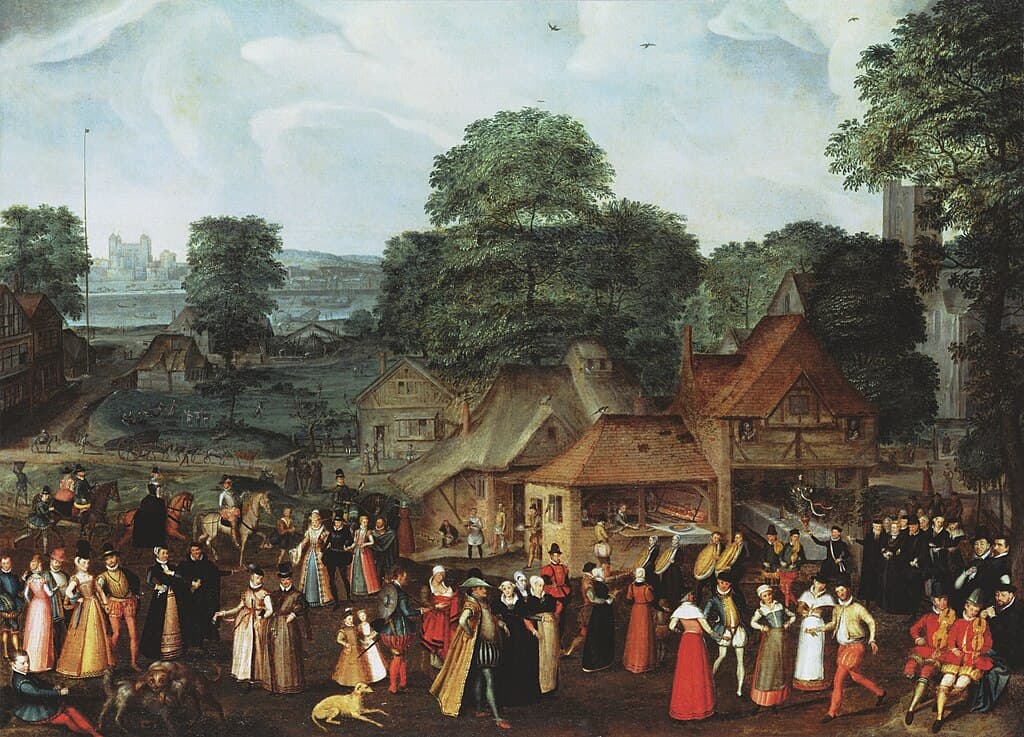
Bermondsey Abbey rapidly acquired a valuable estate, including properties in Surrey, Leicestershire, Hertfordshire, Buckinghamshire, Gloucestershire, Somerset and Kent. In 1268, Bermondsey was granted a Monday market at Charlton as well as an annual fair of three days centred on Trinity Sunday, the eighth Sunday after Easter. By 1535 the abbey’s clear annual income was valued at a little over £474, equivalent to over £7 million today.

Dissolution
Bermondsey Abbey was dissolved in 1537 by Henry VIII, and the estate was acquired by Sir Thomas Pope (founder of Trinity College Oxford) who broke up the Abbey buildings and built a mansion for himself.
Remains Still Visible
Parts of Bermondsey Abbey remain visible today. The remains of the south-western tower of the Abbey church can be seen below the glass floor of the Lokma Turkish Grill & Bar on Bermondsey Square and houses on nearby Grange Walk incorporate some of the Abbey’s remains. Within the structure of the late 17th century Grade II-listed houses numbered 5, 6 and 7 are part of one side of the late medieval stone gatehouse. At number 7 is the chamfered south jamb of the gateway with two wrought-iron gate hooks projecting from the wall and a ‘Gatehouse’ sign.
Blue Plaque for an Abbey
In 2010, following a public vote, a blue plaque for Bermondsey Abbey was unveiled in Bermondsey Square making it the oldest recipient of the award.
See Also:
- Bermondsey Abbey (Wikipedia)
- Bermondsey Abbey (British History Online)
- Chronology of Bermondsey history (South London Guide)
Image: The History of London by Walter Besant,1894 (Project Gutenberg)
Events and Special Offers
New exhibition at Forma, 15 Bermondsey Square, SE1 3FD
Lost Grace Discovered Babeworld Forma, 15 Bermondsey Square, SE1 3FD 25th June – December 2026…

Bermondsey Square’s Festive Giveaway for residents & Christmas Tree Light Switch-On!
Those who live and work on Bermondsey Square are invited to join us for a…
Barkmondsey Square
A ‘Pride and Paws’ event is being held at Bermondsey Square on Saturday 13th June,…
Bermondsey Square FREE Jazz Day Returns – 19th July 2026
The Unity Music Arts Team (UMAT) are delighted to return to Bermondsey Square for the…

Free Jazz Sundays in the Square 2024
Join Stephen Pierre for free jazz in Bermondsey Square on the first Sunday of the…
Pet Shop on Wheels arrives at Bermondsey Square
We are pleased to welcome Pet Shop on Wheels to the square every Thursday, from 12pm…